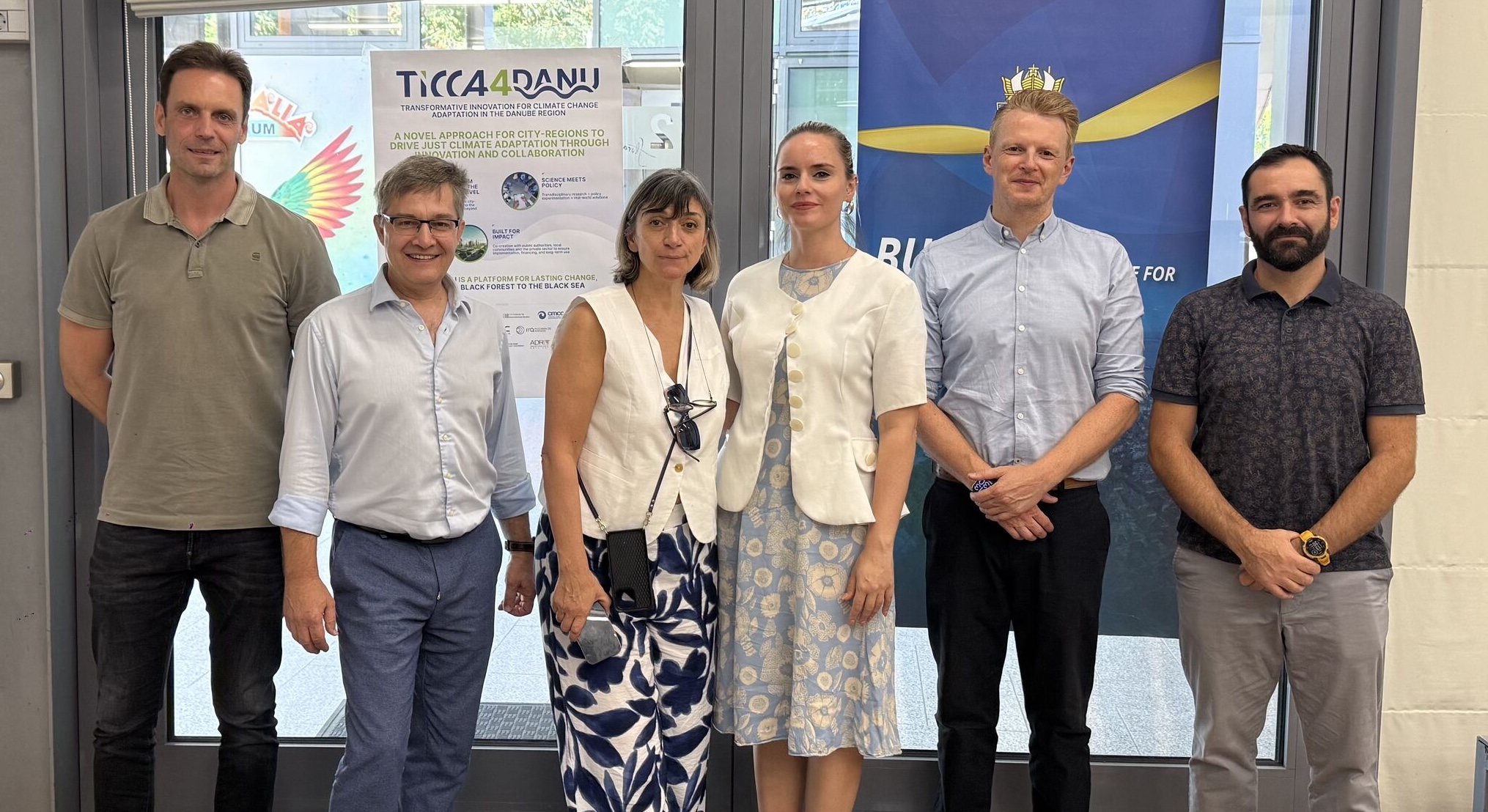

© Jaroslava Szüdi
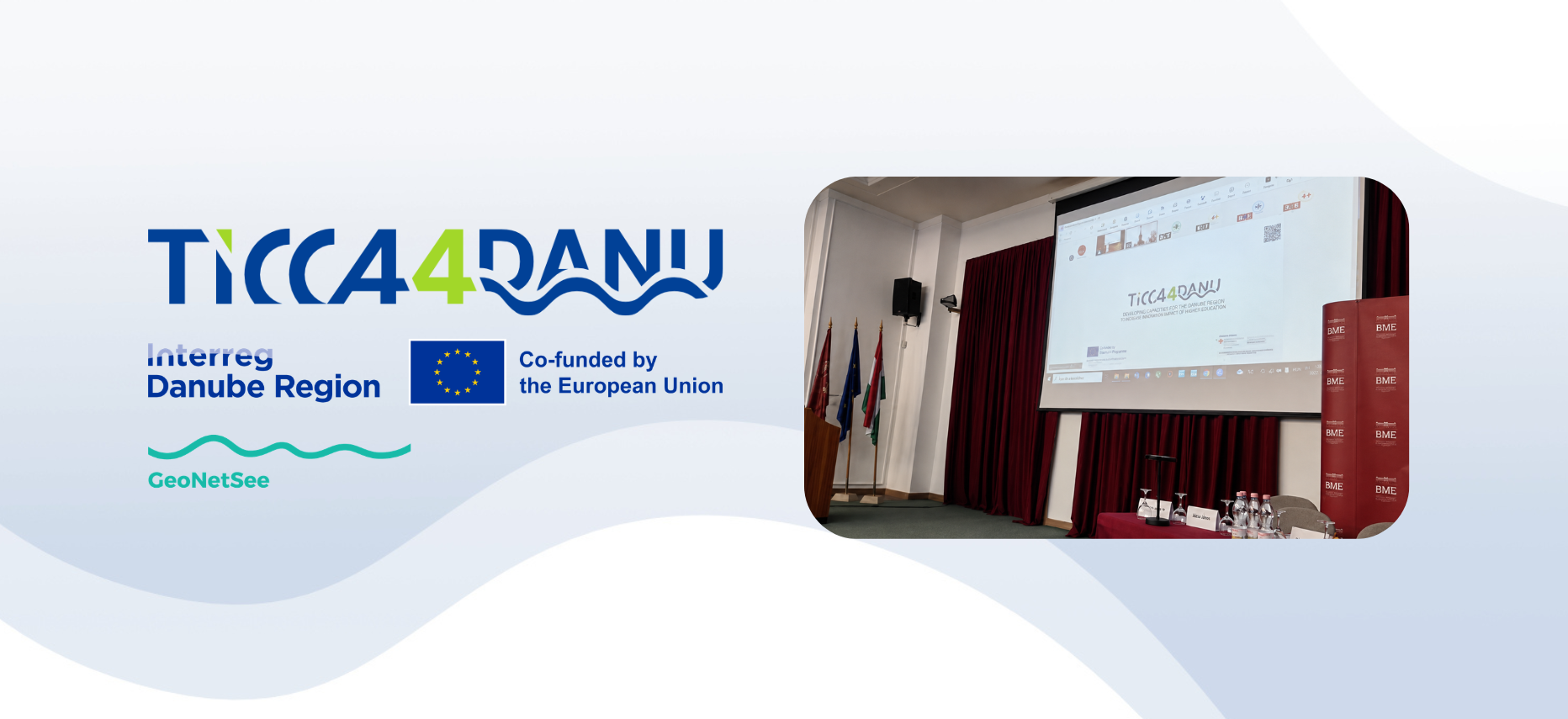
How can cities and their surrounding regions move from individual climate initiatives to coordinated, transformative action? This question was at the centre of the TiCCA4DANU contribution presented by Sadhana Nirandjan (Postdoctoral Researcher at Vrije Universiteit Amsterdam, Institute for Environmental Studies in the Netherlands) on behalf of the TiCCA4DANU project at the Final Conference of the GeoNetSee project on 11 June 2026.
The presentation highlighted TiCCA4DANU’s approach to accelerating just climate change adaptation in the Danube Region through coordinated action at both the city and the regional levels. While many cities are already developing ambitious sustainability and climate strategies, the climate-related hazards they face, such as flooding, wildfires, and extreme heat, do not stop at municipal borders. This is why TiCCA4DANU focuses on the city-region level: the functional space where urban centres, surrounding municipalities, regional authorities, businesses, civil society and research actors need to work together.
A central concept presented was TiCCA4Danu’s novel approach to move beyond isolated local initiatives and support joint climate action at the regional level. This approach entails co-developing Local Green Deals with the cities at an early stage, and subsequently working with the cities, surrounding municipalities and other relevant stakeholders to translate adaptation strategies into coordinated regional action. In our blog and video, the concept of Local Green Deals is explained in more detail.
The presentation used Burgas municipality and Burgas District as an example of how this approach can be translated into practice. This city-region is the first of our four pilot areas. The interim research report published in April serves as the evidence base for further action, and includes climate risk assessment, socio-economic analysis, stakeholder and institutional mapping, and the integration of justice concerns. This enables the project to better understand not only where climate hazards are increasing, but also who is most exposed, which infrastructures are at risk, and what barriers currently prevent effective adaptation. This evidence provides the foundation for developing adaptation pathways that are both regionally coordinated and socially just.
The exchange with GeoNetSee was particularly valuable because both projects address resilience in the Danube Region. Indeed, both projects are linked to the activities of the EU Strategy for the Danube Region (EUSDR) and hold EUSDR Flagship Status. GeoNetSee has put tremendous effort into establishing a geosensor network for monitoring unstable terrain, as well as developing real-time data platforms. Their work underlines the importance of landslide monitoring and highlights the need for coordinated action to ensure the long-term sustainability and viability of such initiatives.
Climate resilience requires reliable information about risks and vulnerabilities, but it also depends on governance structures that can turn knowledge into coordinated measures. This is where TiCCA4DANU contributes: by supporting city-regions in developing shared visions, mobilising stakeholders and identifying joint climate actions that can be implemented across administrative boundaries. Through its work with four Danube city-regions, TiCCA4DANU continues to explore how climate adaptation can become more systemic, inclusive and implementation-oriented. The presentation at the GeoNetSee Final Conference showed that moving from local climate ambition to regional impact requires collaboration, evidence and a shared commitment to transformation.