
© TiCCA4DANU Live Stream Event | 12 May 2026
Climate change is no longer a distant or abstract challenge. Across the Danube Region, cities and regions are already experiencing heatwaves, droughts, floods, water stress, and increasing pressure on infrastructure, economies, and public health. These impacts directly affect citizens in their homes, workplaces, and communities — making climate adaptation one of the most urgent and complex challenges facing Europe today.
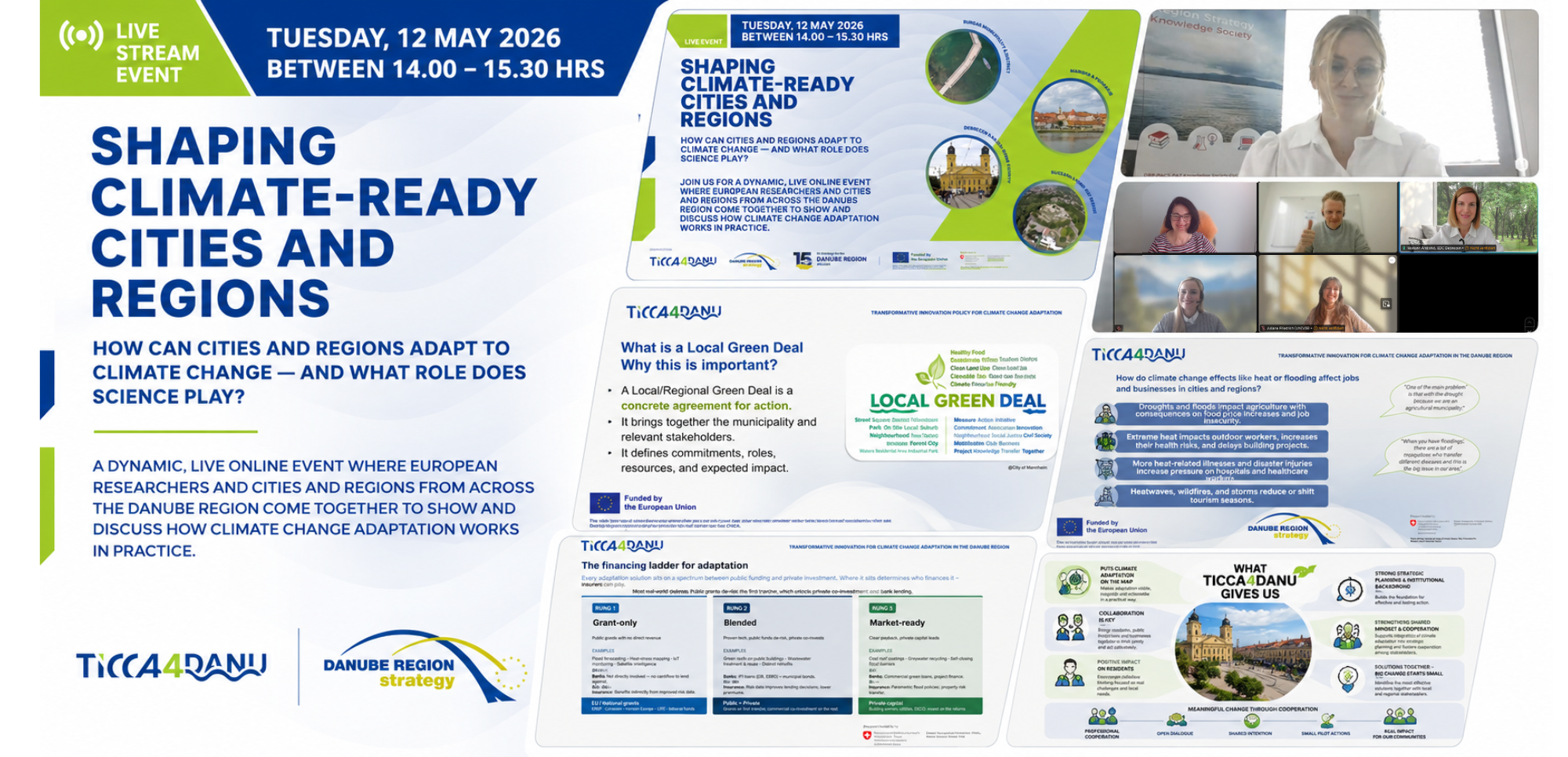
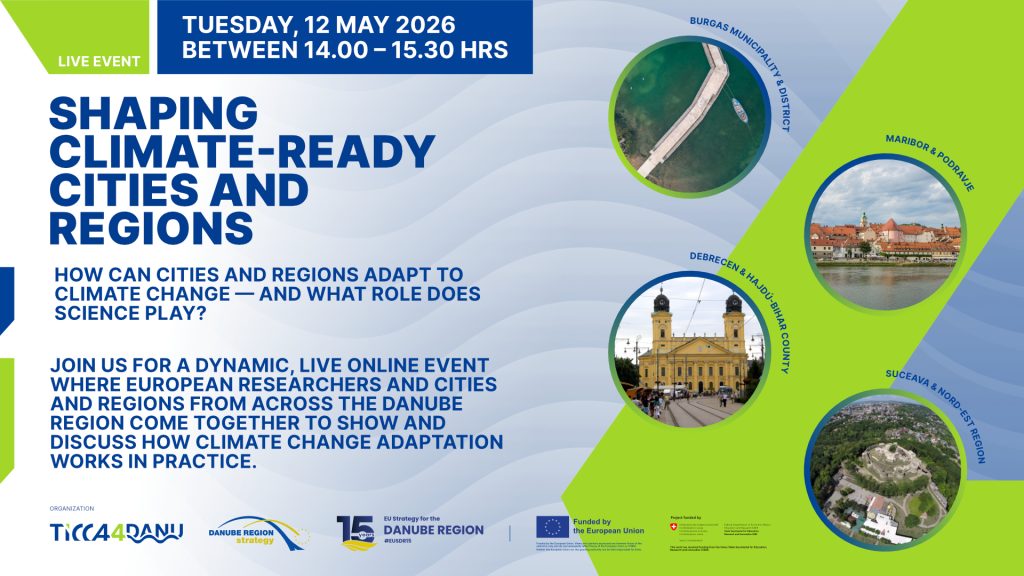
These were among the key messages opening the TiCCA4DANU live streaming event organised on 12 May 2026 in cooperation with Priority Area 7 of the EU Strategy for the Danube Region (EUSDR PA7), dedicated to building the Knowledge Society through research, innovation, and education cooperation across the Danube Region.
Welcoming participants from across the Danube Region and beyond, Barbora Baničová from EUSDR PA7 highlighted the importance of bringing science and research closer to society through accessible and engaging formats:
“Through these streaming events, we aim to present current topics, excellent scientific results, and inspiring experts in a way that connects research with everyday life and real societal challenges.”
The online event gathered more than 70 participants for a 90-minute dialogue involving researchers, municipalities, policy experts, urban practitioners, climate specialists, finance experts, students, and civil society representatives. The discussion demonstrated how climate adaptation requires cooperation across disciplines, sectors, and governance levels.
A central message throughout the event was clear: climate adaptation is not only an environmental issue, but also a social, economic, and territorial challenge requiring coordinated regional responses.
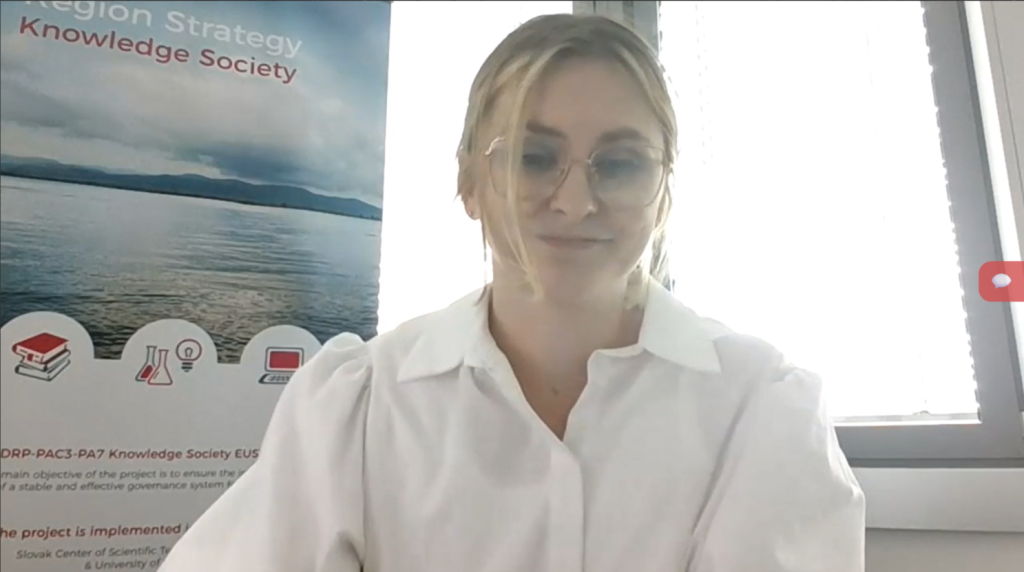
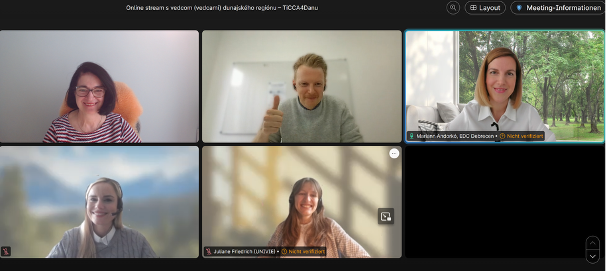
Barbora Baničová (EUSDR PA7) and TiCCA4DANU Team
Understanding climate risks and vulnerabilities
The first expert session, delivered by Prof. Elco Koks from Vrije Universiteit Amsterdam, focused on climate risk and adaptation modelling for cities and regions. He explained how climate risk frameworks help identify who is most vulnerable to extreme climate events such as floods, heatwaves, and wildfires, and where adaptation efforts should be prioritised.
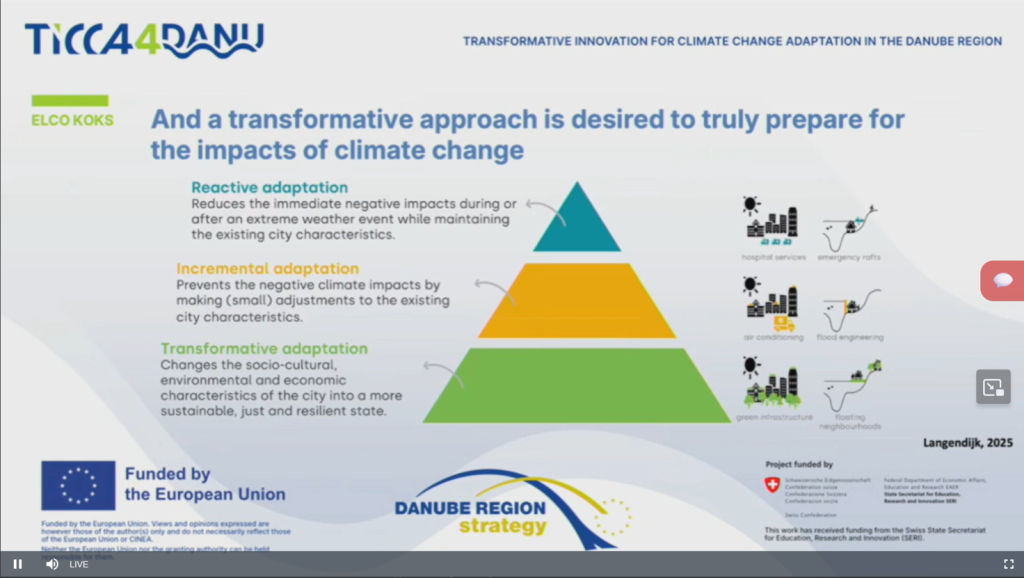
The presentation emphasized that truly climate-resilient cities require transformative adaptation approaches rather than relying solely on reactive or isolated technical measures. Through the “Adaptation Pyramid” approach, cities can better balance emergency preparedness, technological solutions, and long-term systemic transformation.
Prof. Elco Koks (Vrije Universiteit Amsterdam)
Why climate adaptation must also be socially just
Juliane Friedrich from the University of Vienna brought attention to the socioeconomic dimensions of climate adaptation and the unequal impacts climate change can have on communities, businesses, and workers.
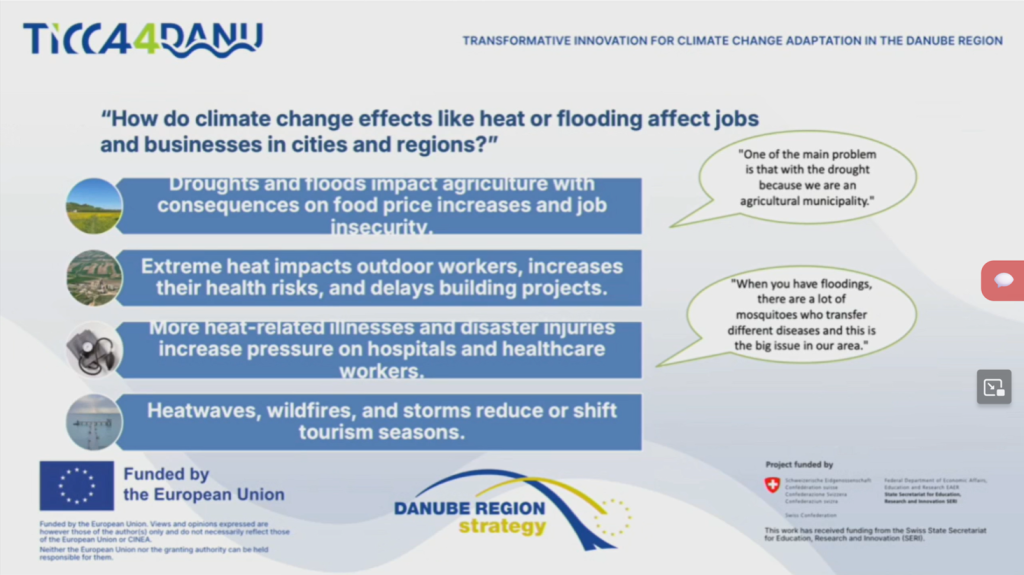
Her presentation highlighted how heatwaves, floods, and droughts affect employment, healthcare systems, tourism, agriculture, and local economies. Particularly important was the discussion on fairness and inclusion in adaptation planning: Who receives support? Whose knowledge counts? Who is most exposed to climate risks?
Using examples from flood-prone and heat-affected regions, she stressed that adaptation measures must actively involve vulnerable communities and integrate local knowledge into decision-making processes.

Juliane Friedrich (University of Vienna)
Local Green Deals as instruments for transformation
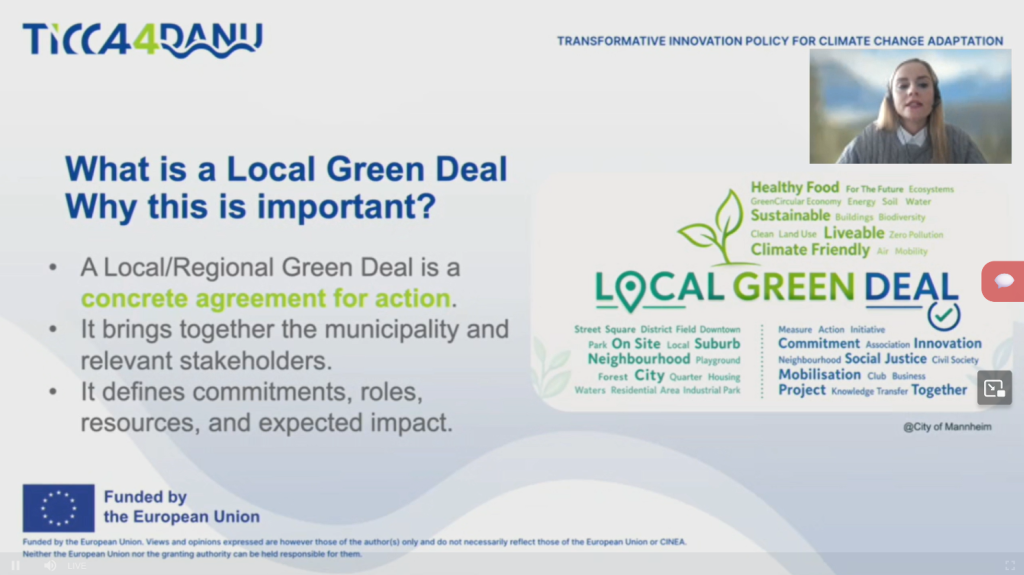
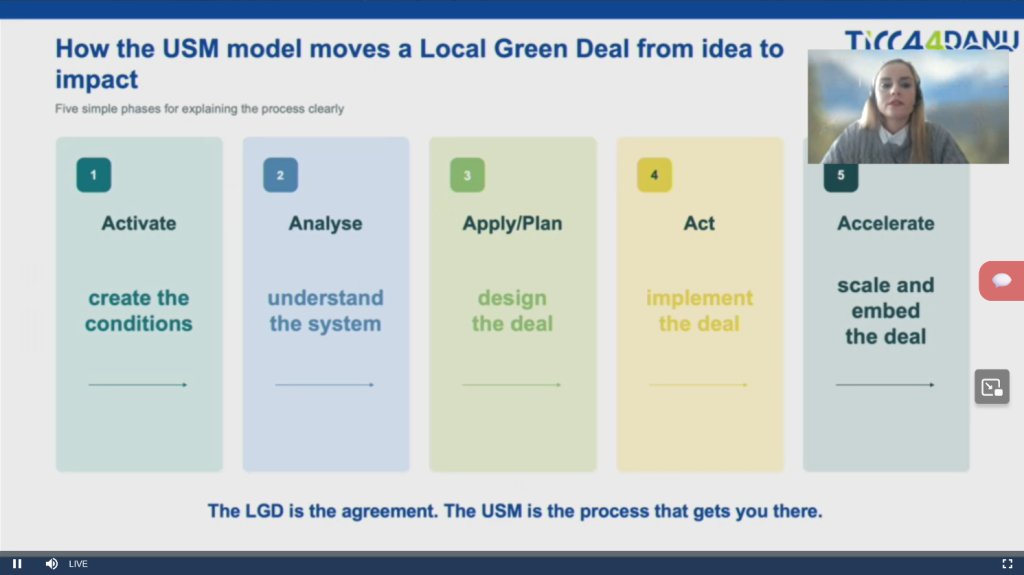
Another key topic was presented by Nina Mia Čikeš from ICLEI Europe, who introduced Local Green Deals as collaborative governance tools designed to connect municipalities, stakeholders, businesses, and communities around concrete climate action.
Her presentation highlighted that cities often already possess innovative climate initiatives, but these actions remain fragmented and disconnected. Local Green Deals can help bridge this gap by defining shared commitments, responsibilities, resources, and expected impacts among stakeholders.
A particularly strong message from this session was: “Climate resilience is a team sport.”
The discussion demonstrated how structured collaboration models can move climate adaptation from isolated projects toward systemic regional transformation.
Nina Mia Čikeš (ICLEI Europe)
Financing adaptation: from costs to avoided losses
The economic dimension of climate adaptation was addressed by Mateja Dermastia, CEO of Anteja ECG, who presented compelling examples of the financial impacts of recent climate events across Europe.
Referencing heat-related mortality, flood damage, and drought-related agricultural losses, the presentation challenged the perception of adaptation as merely an additional expense. Instead, adaptation was framed as an investment in avoided future losses.
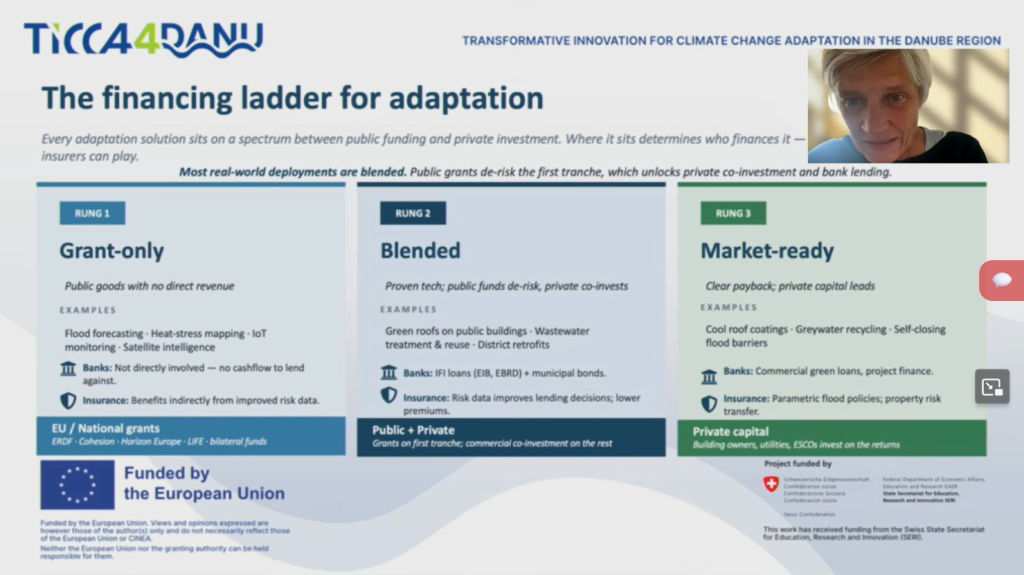
The session also explored different financing models — from public grants and blended financing to market-ready private investment solutions — demonstrating how municipalities, banks, insurers, and local businesses all have important roles in enabling climate resilience.
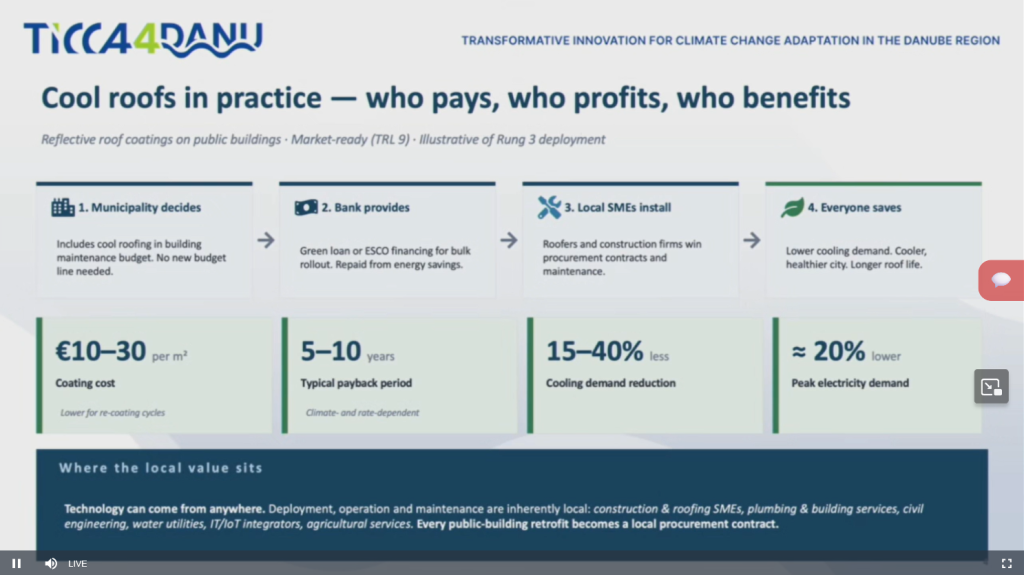
Concrete examples such as cool roof retrofits illustrated how adaptation investments can simultaneously generate local economic value, improve public health, reduce energy demand, and strengthen urban resilience.
Mateja Dermastia (Anteja ECG)
Debrecen: climate adaptation in practice
The event concluded with a practical municipal perspective from Mariann Andorkó of the EDC Debrecen Urban and Economic Development Center.
Her presentation showed how climate change is already reshaping urban and regional development in Debrecen and the wider Hajdú-Bihar region through heatwaves, droughts, inland flooding, environmental degradation, and growing infrastructural pressures linked to industrialisation and urban growth.
The case study illustrated the importance of place-based adaptation approaches that combine environmental, economic, and social perspectives while responding to local realities.
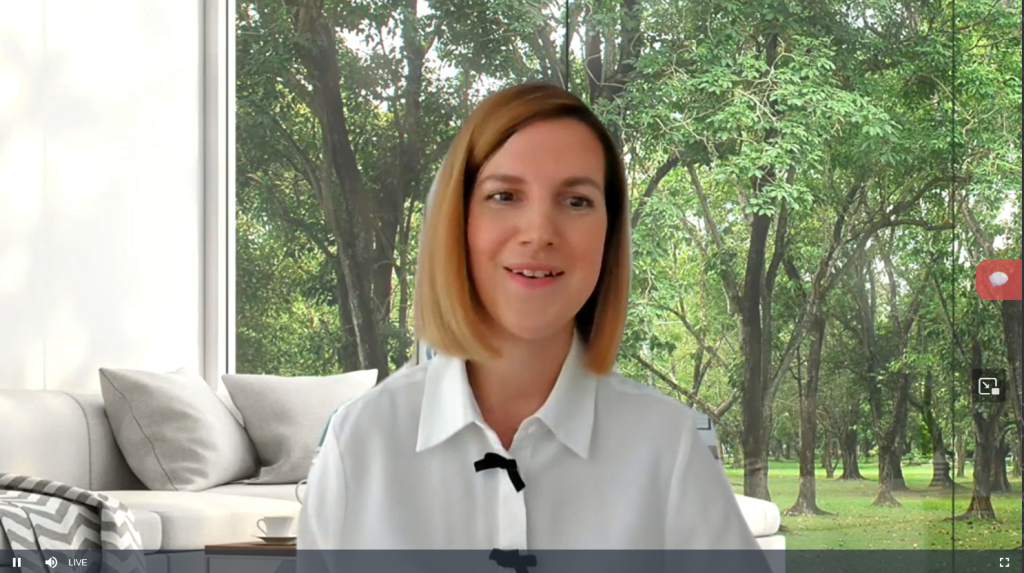
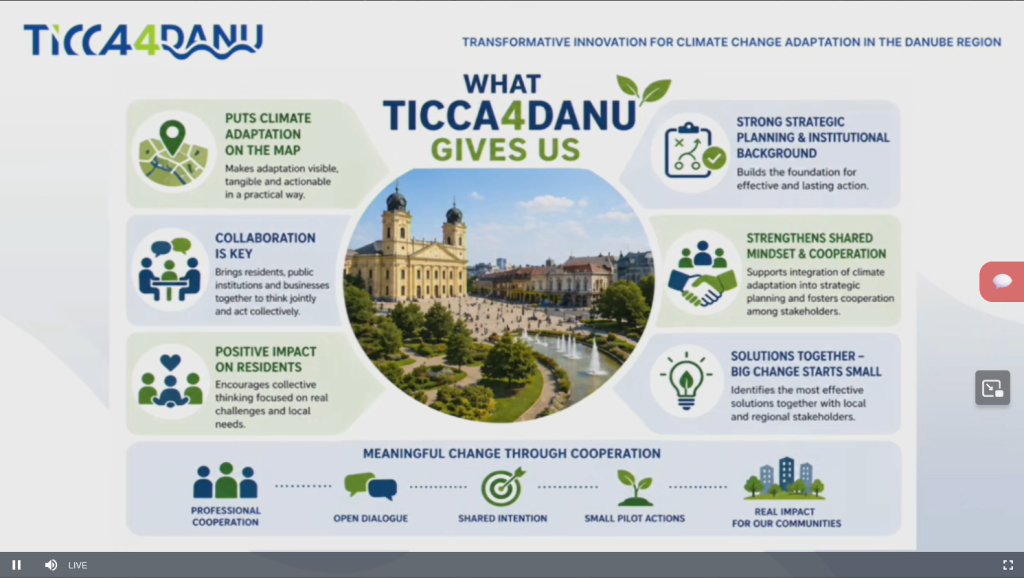
Mariann Andorkó (EDC Debrecen Urban and Economic Development Center)
Building resilient and inclusive communities together
Throughout the event, speakers repeatedly highlighted that climate adaptation cannot succeed through isolated action. Effective responses require collaboration between science, policy, finance, municipalities, businesses, and communities.
As emphasised during the closing session, adaptation must not become a privilege available only to those already equipped to respond. Instead, resilient futures depend on inclusive, evidence-based, and cooperative approaches that ensure climate measures reach the people and places most exposed to risks.
The TiCCA4DANu project demonstrates how innovation can emerge not only through technologies and policies, but also through new forms of stakeholder engagement, knowledge exchange, and cross-sector dialogue.
By bringing together expertise from across the Danube Region in an interactive and accessible live-streaming format, the event provided an important platform for connecting research with practice — and for turning scientific knowledge into practical tools for cities and regions.
🎥 Watch the full recording of the event: