

© TiCCA4DANU
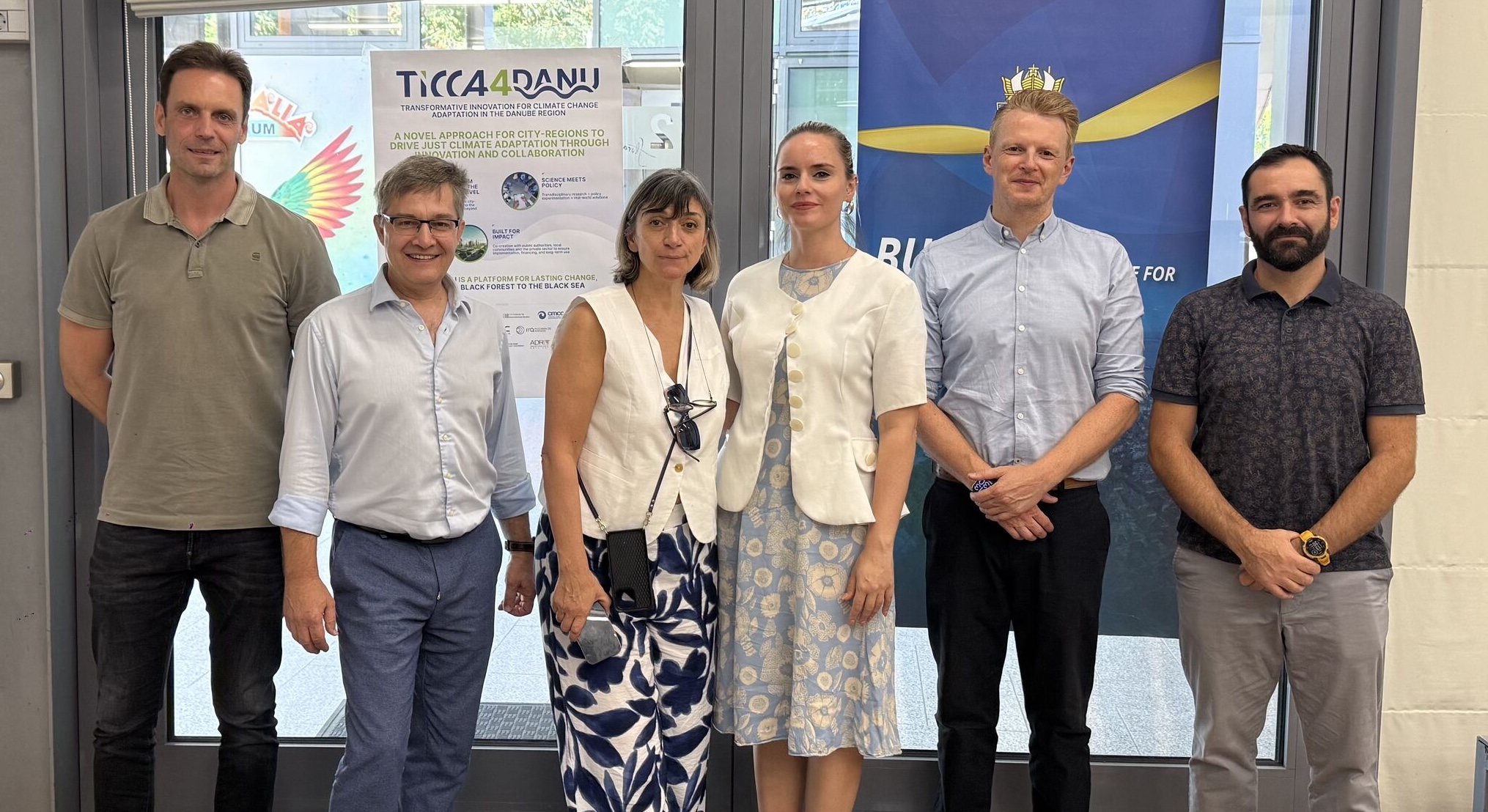
The Synergy Workshop held in Caserta on 27–28 November represented a pivotal moment for the development of Local Green Deals (LGDs) within the TiCCA4DANU project. After the first 6 months of training, mentoring, and online coaching, the meeting marked the first major opportunity for the four anchor cities to collectively reflect on their LGD Work Plans, present their progress, and align future steps across city and regional levels.
Local Green Deals are at the core of TiCCA4DANU’s place-based approach to climate change adaptation. Rather than being standalone policy documents, LGDs function as collaborative frameworks that bring together public authorities, private actors, civil society, and knowledge institutions to co-design and implement concrete adaptation actions. In Caserta, the focus was on understanding LGD development as dynamic processes that evolve through co-creation with the future signatories, learning, and continuous stakeholder engagement – leading to fixed outcomes, i.e. written action agreements in the end.
During Day 1 of the workshop, the LGD process was revisited and consolidated. Cities reflected on what had happened so far – from the initial LGD training and mentoring sessions in Vienna, to a series of online coaching meetings and bilateral exchanges that supported the development of their work plans. The Caserta meeting served as a milestone to support the finalisation of these plans, identify priority action pathways, and prepare for their submission, while also clarifying how LGDs will transition from planning to implementation in the coming project phases.
A central element of the discussion was ICLEI’s Urban Sustainability Model, using the 5A approach – Activate, Analyse, Apply, Act, Accelerate – which provides a shared structure for LGD development across cities. This framework helps cities activate relevant stakeholders, analyse local challenges and capacities, apply suitable solutions, act through concrete pilot measures, and ultimately accelerate successful approaches at scale. Importantly, LGDs were discussed in close connection with the Open Discovery Process (ODP) at the regional level, highlighting the need to align city-led action with broader regional cooperation and innovation dynamics.
Day 2 deepened this work through an interactive LGD–ODP journey, where partners engaged directly with each city’s context, priorities, and emerging ideas. This hands-on exchange strengthened mutual understanding across the consortium and helped identify where additional research, stakeholder engagement, and governance support will be most critical in the months ahead.
City-Level Progress and Key Directions
Burgas
Discussions around Burgas’ LGD focused on cooling strategies at both city and regional levels, with a strong emphasis on nature-based solutions such as reforestation and urban green spaces. A key insight was that the city’s hottest areas are primarily industrial zones rather than residential neighbourhoods, opening new opportunities for private-sector engagement. Partners explored alternative cooling solutions suitable for industrial contexts and discussed incentives for companies to participate. The need for stronger inter-municipal cooperation across the Burgas region also emerged, with proposals to establish a thematic platform – potentially led by the municipality – to foster collaboration on shared challenges such as water management, wildfires, and nature-based solutions.

Maribor
Maribor used the Caserta meeting to reflect on how to strengthen the link between its city-level LGD and regional ambitions. A key proposal was to convene mayors from surrounding municipalities to form a dedicated LGD working group, aimed at defining shared goals and coordinated actions. Concrete initiatives already underway – such as a wastewater reuse pilot for public transport cleaning, improvements in urban water management, and energy-saving measures in schools – were highlighted as building blocks for broader transformation. The discussions confirmed the value of this early phase in building shared understanding and institutional readiness before moving toward full implementation.

Suceava
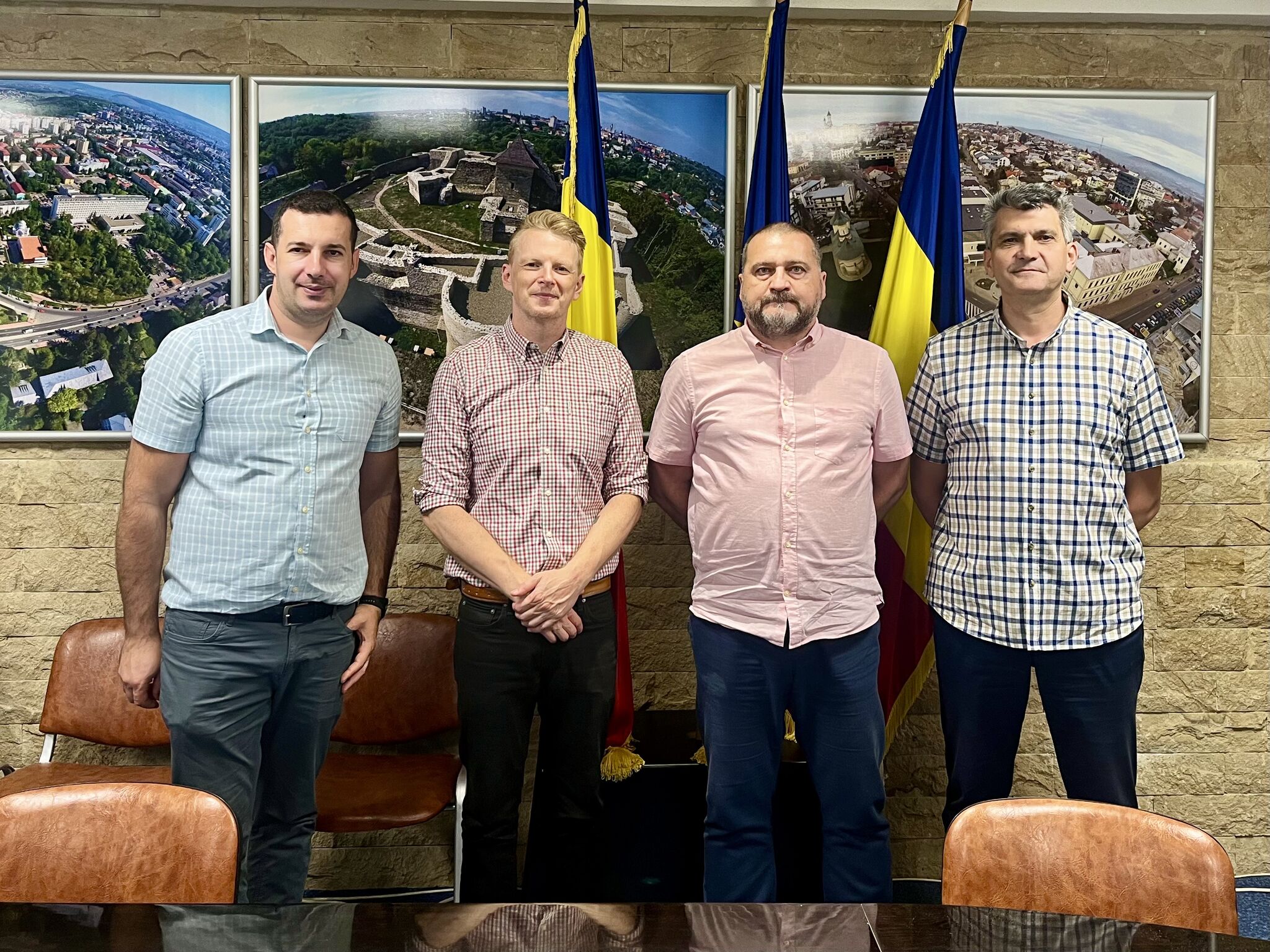
Although the Suceava team was unable to attend the workshop in person, their LGD Work Plan was presented and discussed on Day 1. Their contribution remains an important reference point within the project, and their LGD pathway will be further explored and integrated in upcoming activities, particularly as the regional Open Discovery Process advances.

Debrecen
Debrecen’s discussions focused on preparation and strategic sequencing, as the city is scheduled to launch its Open Discovery Process at a later stage. Partners emphasised the value of using this time to map potential LGD actions, establish priorities, and develop an action matrix. Several promising ideas were explored, including the creation of a proactive climate adaptation fund, stronger alignment between LGD actions and corporate ESG commitments, and a scalable circular water management model involving industrial actors and the local water treatment plant. While these ideas demonstrated strong financial and value-chain potential, participants also noted the need to more explicitly integrate citizen engagement and justice considerations as the LGD evolves.

To conclude, readers are invited to watch the short video of Niklas Mischkowski from ICLEI, which offers a clear and accessible snapshot of the Local Green Deal journey within TiCCA4DANU. In a concise and engaging way, the video reflects on the work carried out in the months leading up to the Caserta meeting and looks ahead to the next steps, highlighting how the momentum built in Caserta will now translate into concrete action on the ground.
👉 Watch the video here