
© MIP4Adapt
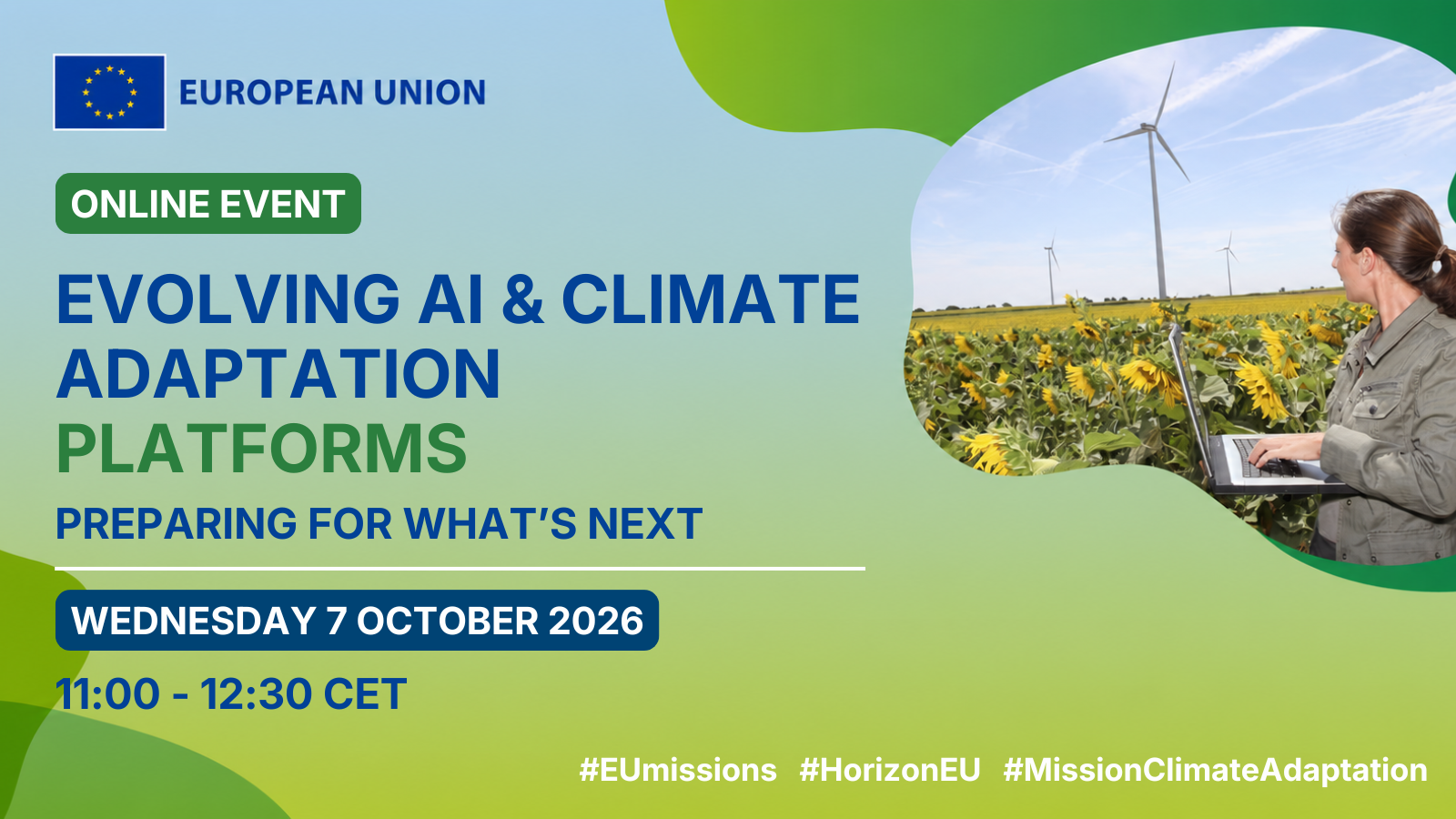
Wednesday, 7 October 2026 | 11:00–12:30 CET | Online
Artificial intelligence is changing how people search for, discover and use climate adaptation information. As AI tools become more widely available, climate adaptation platforms face an important question: how can they make effective use of these technologies while continuing to provide reliable, trusted and up-to-date knowledge?
The online event “Evolving AI & Climate Adaptation Platforms: Preparing for What’s Next” will bring together platform managers and developers, AI specialists, regional and local authorities, and members of the EU Mission Adaptation Community to begin answering that question.
Co-organised by MIP4Adapt and the Climate Adaptation Platforms Thematic Working Group, the webinar is the first in a new series exploring the future relationship between artificial intelligence and climate adaptation platforms.
The session will feature short perspectives from three established knowledge platforms: Climate-ADAPT, PANORAMA and weADAPT. Speakers will share how AI is already affecting the management, discovery and communication of climate adaptation knowledge, as well as the practical questions platforms must address as the technology evolves.
These contributions will provide a starting point for a broader conversation about how AI could improve access to relevant adaptation information, connect users with suitable tools and examples, and help platforms manage increasingly large bodies of knowledge.
The event will also consider the associated challenges. These include the quality and traceability of AI-generated results, transparency, interoperability, responsible data use, technical capacity and the need to maintain user trust.
This is not only a presentation-based webinar. Following the opening perspectives, participants will take part in dedicated breakout discussions to identify and map the most important technical AI challenges and opportunities facing climate adaptation platforms.
The collective findings will contribute to a longer-term vision for the platform community through 2027. Participants will therefore have an opportunity to influence future cooperation and help define where shared learning, experimentation and practical guidance may be most valuable.
The webinar will be particularly relevant to:
As climate risks become more complex and the volume of available information continues to grow, adaptation platforms have an increasingly important role in connecting decision-makers with credible and actionable knowledge. This webinar offers an opportunity to explore how AI can support that role—and what safeguards and shared approaches will be needed.
Join the session to exchange experience, contribute your perspective and help shape the next phase of collaboration on AI and climate adaptation platforms.
👉🏻 Register for the online event
👉🏻 View the official event page on the EU Mission Adaptation Community