
Resilient by Design, Just by Choice: Shaping the Danube Region's Climate Future
© TiCCA4DANU
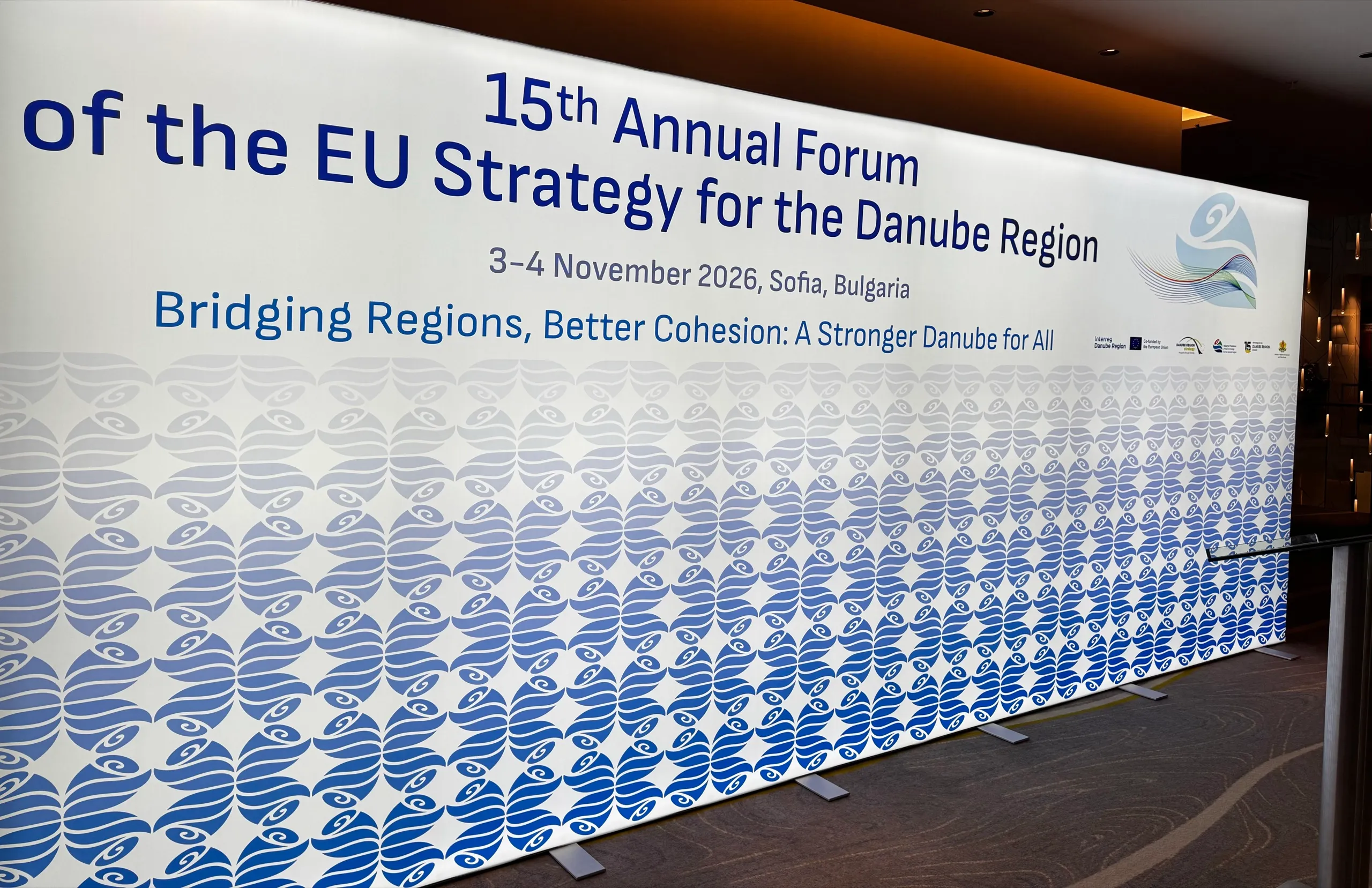
Sofia, 3 November 2026 – How can the Danube Region become more resilient to climate change while ensuring that no one is left behind? This was the central question at the mid-term dissemination event of the TiCCA4DANU Horizon Europe project, organised as a pre-event to the 15th Annual Forum of the EU Strategy for the Danube Region (EUSDR) on 3 November in Sofia, Bulgaria.
As a Flagship project of EUSDR Priority Area 7 (Knowledge Society), TiCCA4DANU brought together policymakers, researchers, innovation experts and regional stakeholders to explore how European climate resilience ambitions can be translated into concrete action across the Danube Region.
The event was organised in collaboration with EUSDR Priority Area 7 and the Danube Strategy Point, with the support of the Bulgarian EUSDR Presidency and the Ministry of Regional Development and Public Works.
© TiCCA4DANU
Climate Resilience by Design: Connecting EU Ambitions with the Danube Region
With the European Commission having presented its new EU Framework for Climate Resilience just days earlier, on 27 October 2026, the event offered a timely opportunity to discuss its implications for the Danube Region.
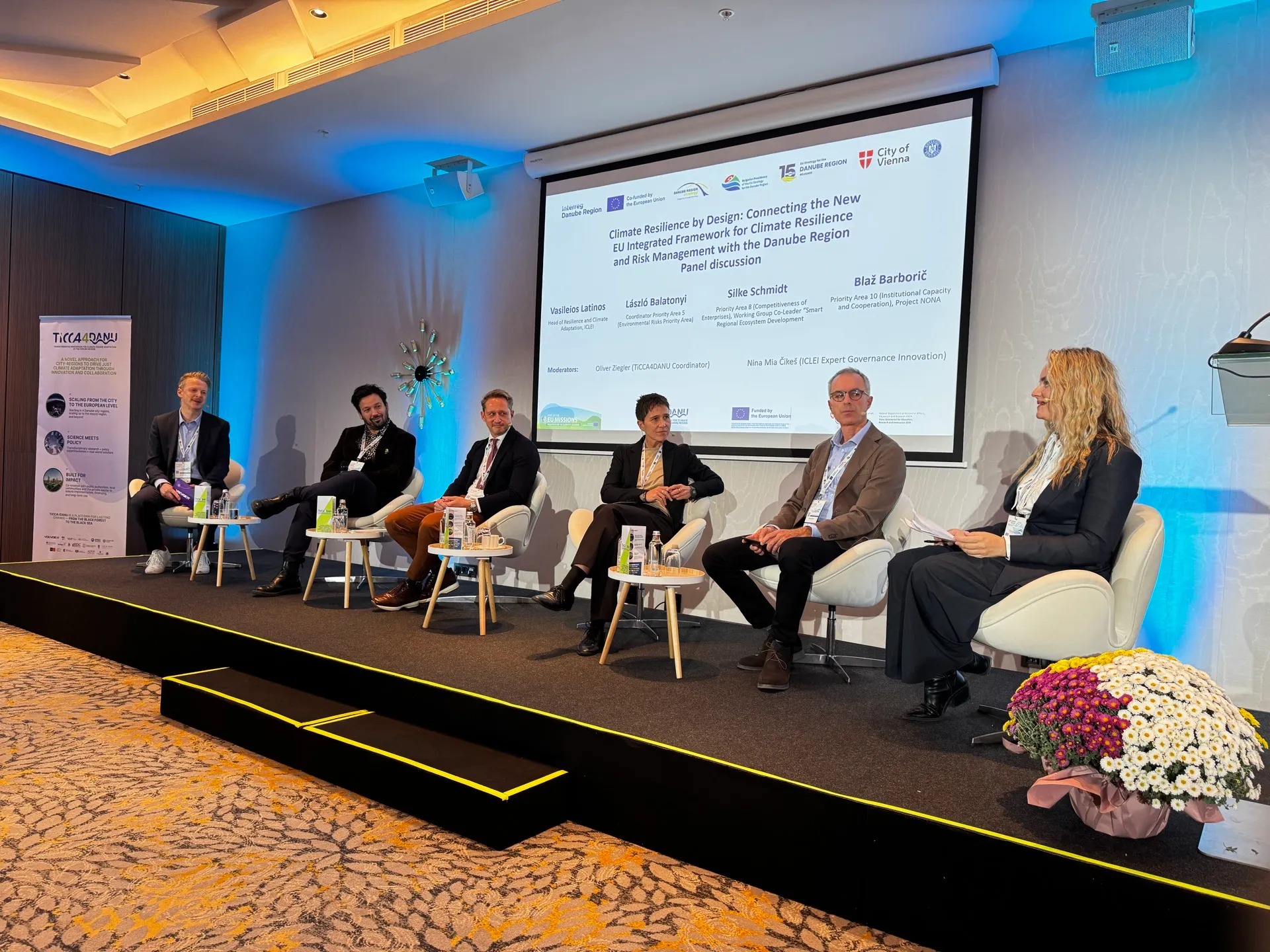
A high-level panel discussion, moderated by Nina Mia Cikes (ICLEI Europe) and Oliver Ziegler (VDI/VDE-IT), coordinator of TiCCA4DANU, brought together four perspectives on the challenges and opportunities of climate adaptation:
- Vasileios Latinos, Head of Resilience and Climate Adaptation at ICLEI Europe, addressed the new EU framework and the crucial role of cities and regions in turning European policy into local action.
- László Balatonyi, coordinator of the EUSDR Priority Area 5 (Environmental Risks), focused on cross-border cooperation, climate risk management and preparedness.
- Silke Schmidt, representing EUSDR Priority Area 8 (Competitiveness), explored how businesses, particularly SMEs and clusters, can contribute to climate resilience through innovation and investment.
- Blaž Barborič, Director of the Geodetic Institute of Slovenia and representing the NONA project and EUSDR Priority Area 10 (Institutional Capacity and Cooperation), highlighted the importance of building practical skills for sustainable territorial development, strengthening the capacities of cities and regions for participatory spatial planning, mobilising green investments and bringing public authorities, businesses and civil society together to transform degraded areas into opportunities for sustainable development.
The discussion placed particular emphasis on connecting European policy with regional implementation, overcoming institutional and financing barriers, and strengthening cooperation between different EUSDR Priority Areas. Especially regarding the next EU Multiannual Financial Framework (MFF) the need to earmark budget for local governments’ climate action – both for mitigation and adaptation – was stressed. The Danube region’s public sector is dependent on these EU funds more than other regions, and a discontinuation of regional funds earmarked for climate action risks weakening the much-needed action in this area.
The overarching message was clear: climate risks do not respect administrative or national borders. Building resilience therefore requires better coordination across governance levels, stronger involvement of the private sector and a shared commitment to turning knowledge into action.
Just Resilience: Leaving No One Behind
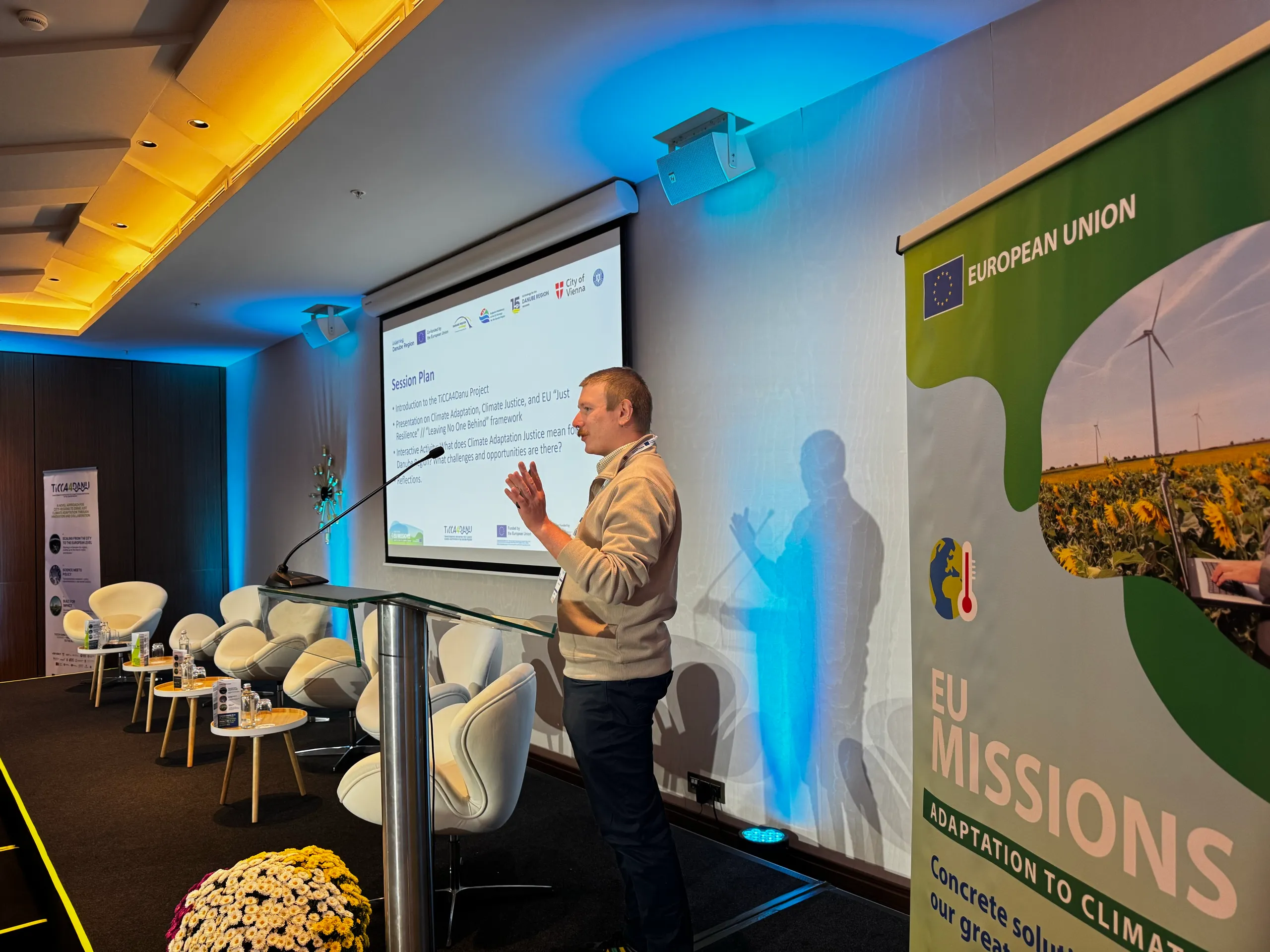
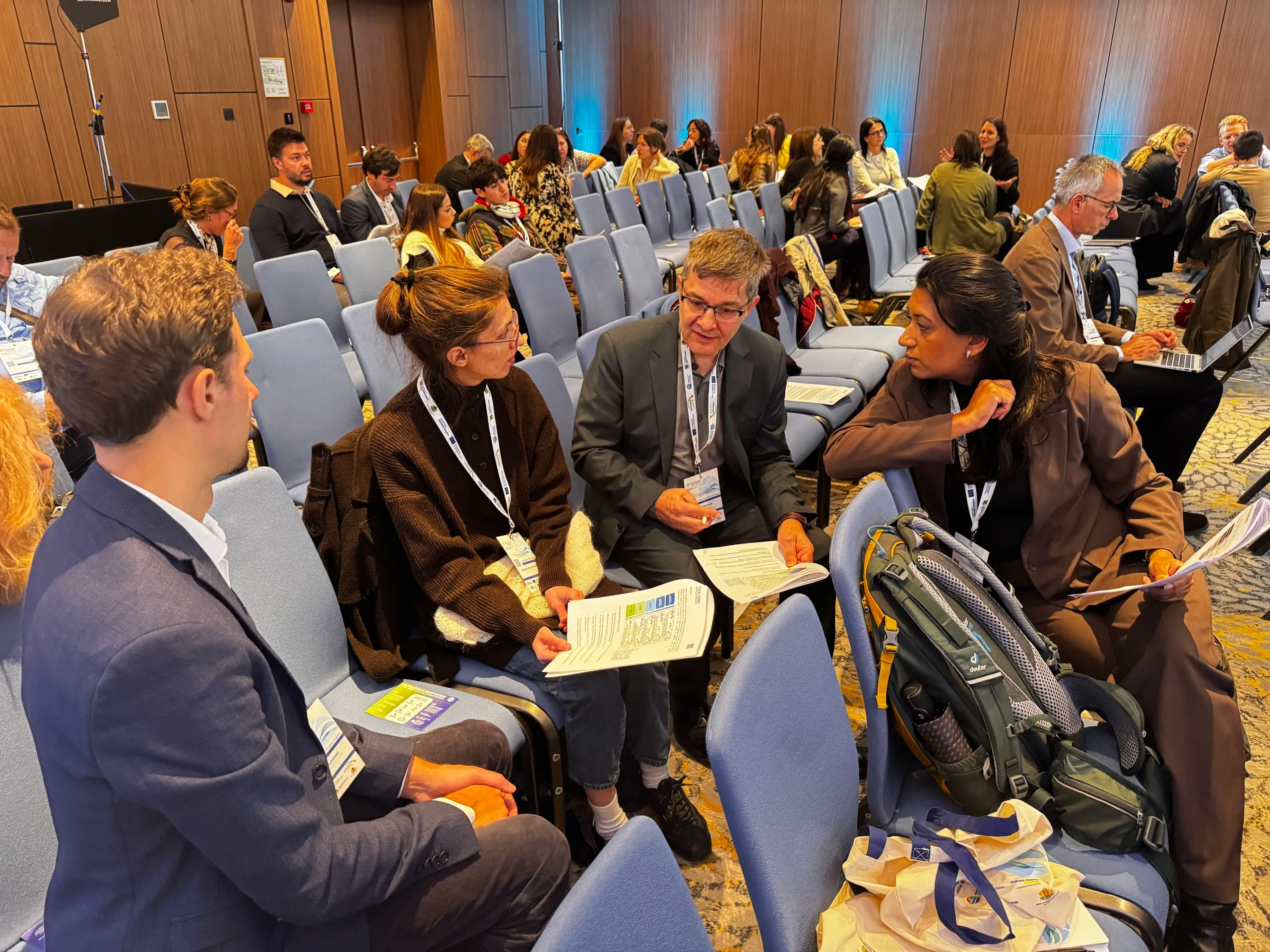
The second part of the event moved from policy discussion to an interactive workshop entitled "Towards Leaving No One Behind: What Does 'Just Resilience' Mean in the Danube Region?", facilitated by Elliott Woodhouse and Xiran Dong from the International Institute for Applied Systems Analysis (IIASA).
Climate change does not affect everyone equally. Vulnerability depends not only on exposure to climate hazards, but also on social, economic and institutional factors. Moreover, adaptation measures themselves can unintentionally reinforce existing inequalities.
Building on the EU's approach to Just Resilience, the workshop explored how to ensure that climate adaptation measures distribute benefits fairly, recognise the needs of vulnerable groups and enable meaningful participation in decision-making.
Through interactive exchanges, participants reflected on unequal climate risks, barriers to public engagement and the challenges of implementing fair and inclusive adaptation policies across the Danube Region.
The discussions will contribute to TiCCA4DANU's ongoing research on climate adaptation justice and the development of practical approaches for more inclusive climate resilience planning.
© TiCCA4DANU
Strengthening Cooperation Across the Danube Region
The event highlighted the importance of connecting research, policy, business and local implementation to address climate risks that affect the entire Danube Region.
Through its work with cities and regions in Bulgaria, Hungary, Romania and Slovenia, TiCCA4DANU is developing and testing transformative approaches to climate adaptation, combining scientific evidence, participatory processes and innovative governance. As an EUSDR Priority Area 7 Flagship project, TiCCA4DANU contributes to strengthening knowledge exchange, innovation and cooperation across the Danube Region.
The key message from Sofia: Building a climate-resilient Danube Region requires more than ambitious policies. It calls for connecting knowledge, innovation and governance, engaging businesses and local authorities, and ensuring that climate adaptation benefits everyone – leaving no one behind.

© TiCCA4DANU